odp
241 to 264 of 294 locations
-
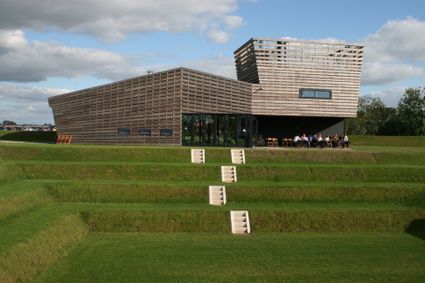
Culture Factory
Culture Factory
3901 TP Veenendaal -
Fort Nieuwersluis
Fort Nieuwersluis
Rijksstraatweg 7b
3631 AA Nieuwersluis -
Peking Garden
Peking Garden
-
Fort aan de Klop
Fort aan de Klop
3563 MC Utrecht -
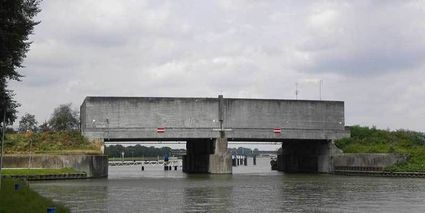
Plofsluis
Plofsluis
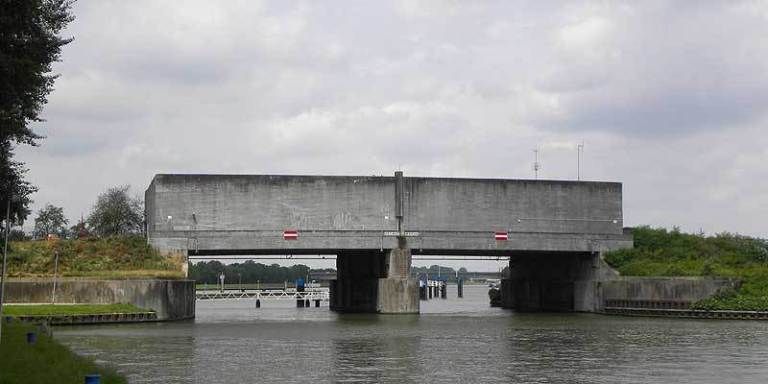
The Plofsluis consists of five concrete bins with a relatively weak floor that span the Amsterdam-Rhine Canal. The bins could store around 40,000 tonnes of sand, gravel or debris. In wartime, the floor could be blow up, so that its contents would drop into the Amsterdam-Rhine Canal. This would block the canal and prevent the inundation water from flowing out. The lock was designed in such a way that its sides would remain upright after the explosion, so that the floor could be reconstructed and the sluice could be used again. It was never actually used.
3439 LS Nieuwegein -
-
Werk aan het Spoel
Werk aan het Spoel
In 1815, a fan lock was built into the Lekdijk near Goilberdingen for inundation purposes. It was protected by an earthen battery. In 1848, the battery was upgraded to a fort. Later on, the inundation system was optimised, and four bomb-proof buildings were added to the fort. In peacetime, the road on top of the dyke ran right through the fort, but traffic was led around the fort in times of mobilisation. In 1939, seven concrete shelters and two machine gun casemates were added. An unusual feature is the high free-standing wall in a field to the south of the fort. This was the stop butt of a German firing range.
4106 LC Culemborg -
-
Hoeve Ravenstein
Hoeve Ravenstein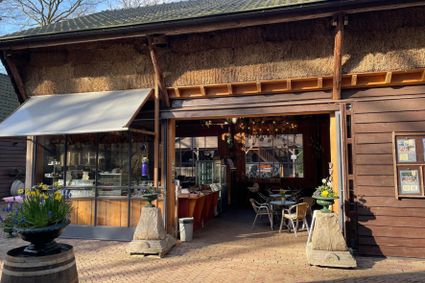
3744 ML Baarn -
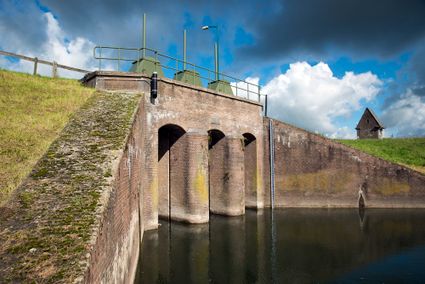
Inundation lock at Wijk bij Duurstede
Inundation lock at Wijk bij Duurstede
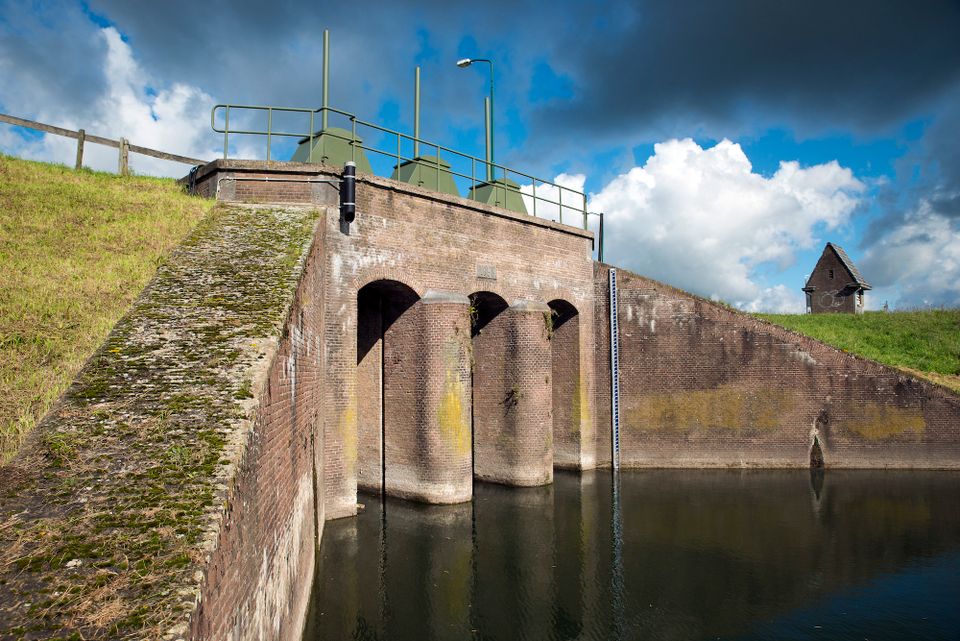
In 1870, the Kromme Rijn was given a key role in the New Dutch Waterline. Back then, it took almost a month to flood the area around Utrecht. This had to be speeded up. To this end, the river was widened, its bends were straightened and locks and dams were built. Near Wijk bij Duurstede, a large inundation lock was built that made Wijk bij Duurstede the ‘tap’ with which to turn on the New Dutch Waterline. This reduced the time needed to flood the inundation areas to between 4 and 12 days. The inlet is still used daily to transport fresh water to the city of Utrecht and the river Vecht.
3961CH Wijk bij Duurstede -
-
Allurepark De Zeven Linden
Allurepark De Zeven Linden
3744 BC Baarn -
Pannenkoekenhuis Bergzicht
Pannenkoekenhuis Bergzicht
3931 MH Woudenberg -
Fort Jutphaas
Fort Jutphaas
Fort Jutphaas 3
3439 LX Nieuwegein -
Fort Voordorp
Fort Voordorp
3737 BK Groenekan -
Landgoed Ginkelduin
Landgoed Ginkelduin
3956 KD Leersum -
Fort bij Vechten - Waterline Museum
Fort bij Vechten - Waterline Museum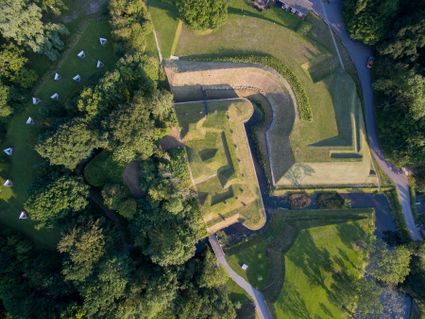
Achterdijk 2
Bunnik -
Logis Hotel Het Wapen van Harmelen
Logis Hotel Het Wapen van Harmelen
3481 EK Harmelen -
TOP Tea Garden Eemnes
TOP Tea Garden Eemnes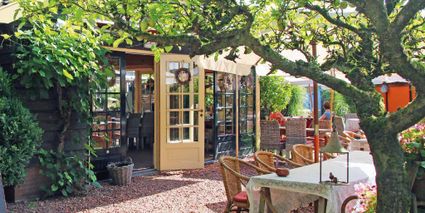
3755 PD Eemnes -
Blokhoven inundation area
Blokhoven inundation area
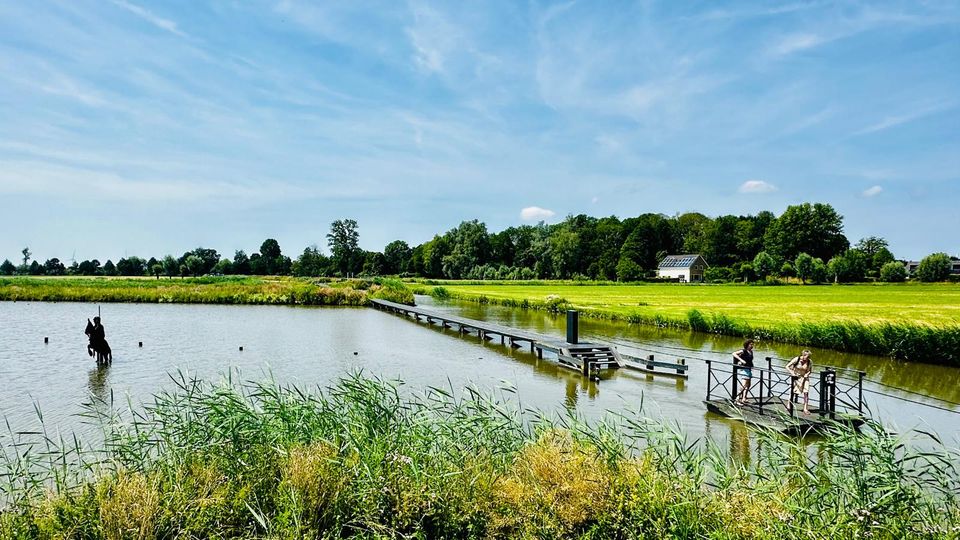
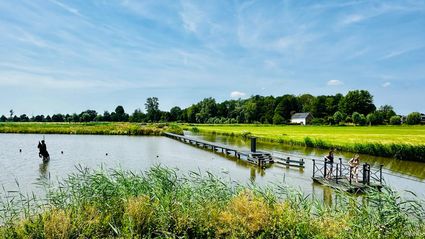
The Blokhoven polder flood plain is situated behind the Achterdijk in Schalkwijk. During heavy rainfall, it can collect up to 23,000 m3 of water to prevent Schalkwijk from being flooded. This volume is equivalent to around 10 Olympic swimming pools. The area is at the heart of the New Dutch Waterline. In the summer, the plain is flooded twice a month to illustrate the inundation principle for visitors. If heavy or prolonged rainfall is forecast, the water board may decide to forego the inundation, as the plain will be needed to collect excess water.
3998 NE Schalkwijk -
-
Geertje’s Hoeve
Geertje’s Hoeve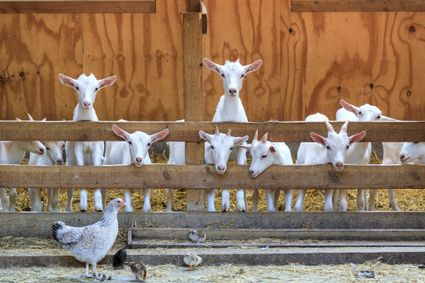
Thematerweg 5
3455 SM Utrecht -
Papal house
Papal house
3512 HE Utrecht -
The old St. Nicholas Church
The old St. Nicholas Church
3401 BM IJsselstein -
Fort Maarsseveen
Fort Maarsseveen
Herenweg 2
3602 AM Maarssen -
Bungalowpark 't Eekhoornnest
Bungalowpark 't Eekhoornnest
3768 HL Soest -
Fort Everdingen
Fort Everdingen
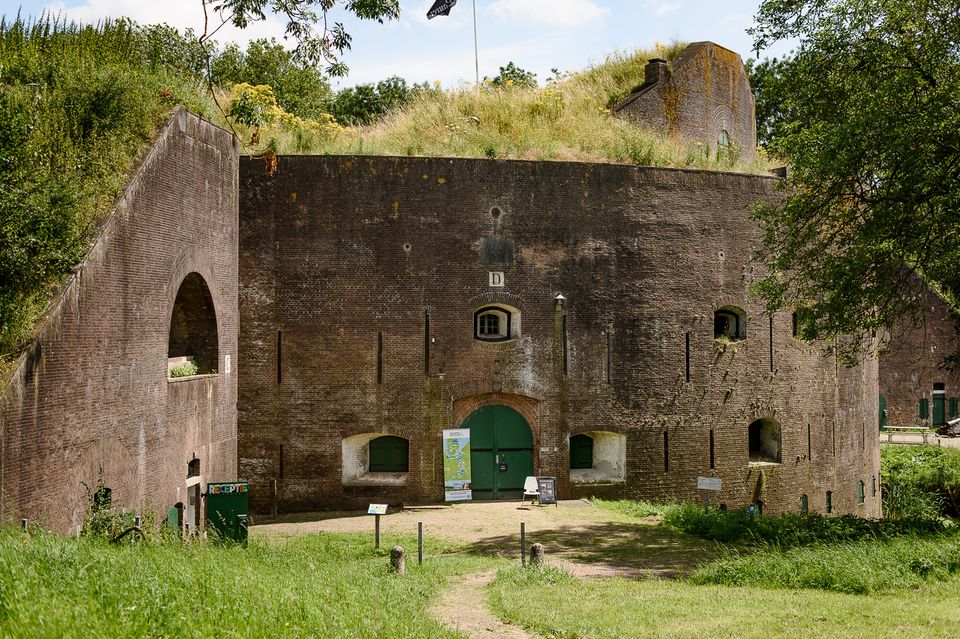
Anyone who delves into the history of the Vijfheerenlanden will soon discover that the now very quiet and peaceful area has a history filled with clashing weapons. Destroyed towns and castles, plundering and domestic (and foreign) wars: every town and village has its own story to tell. Everdingen was put on the Dutch military map in the 19th Century as part of the New Dutch Water Line.
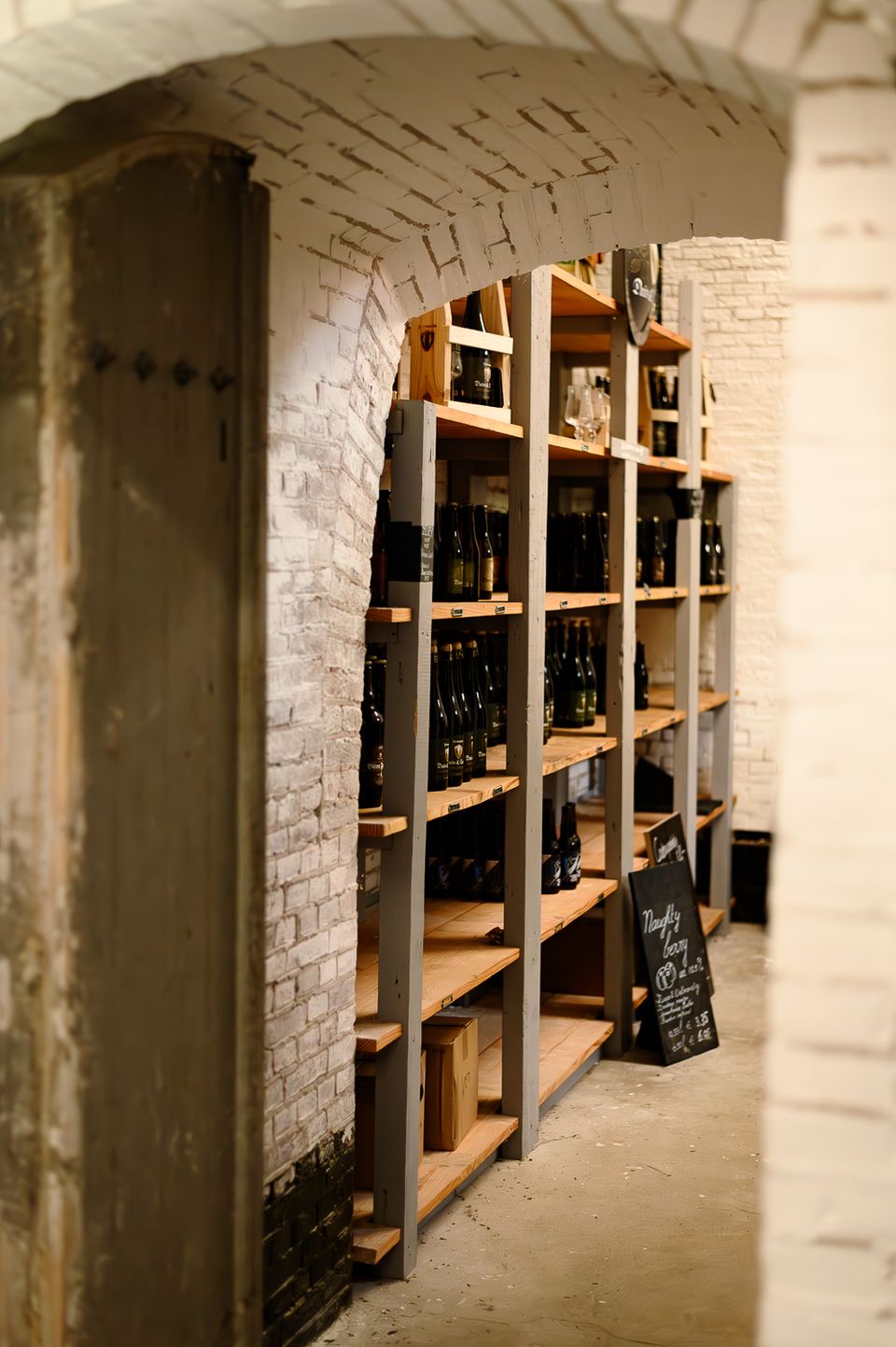
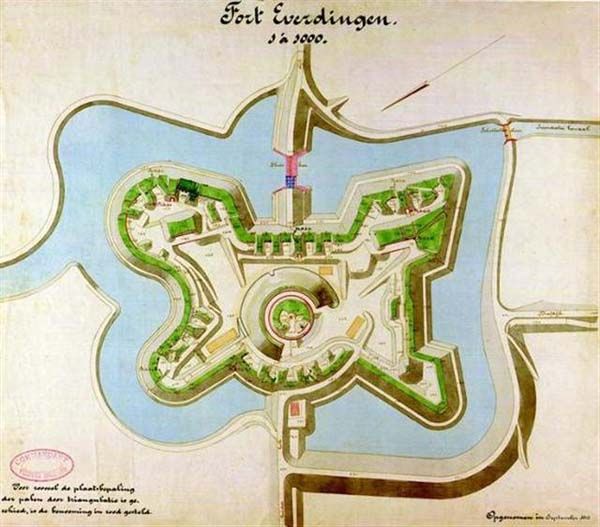
The New Dutch Water Line ran from the former Zuiderzee near Muiden to the Biesbosch near Werkendam and consisted of a variety of defences and inundation fields (areas that could be placed underwater). Fort Everdingen was built between 1842 and 1847 and, together with Fort Honswijk, formed the Lek access on the other side of the Lek. The surrounding land could be flooded using inundation locks. The fort itself was walled and well defended by a variety of casemates. The new Dutch Water Line was prepared 3 times. At the end of World War II, German forces used the line as a defence against the advancing Allies. Fort Everdingen lost its defensive function after the war. The military Explosive Ordinance Disposal service used the fort until 2014. It’s now home to the German & Lauret brewery, which uses the special water filtering system in their brewery. It’s also an over-wintering place for many bats.
Further reading: Batestein Castle, Hagestein Castle, Vianen Castle, Brederode statue, Everdingen village centre, Vianen water tower.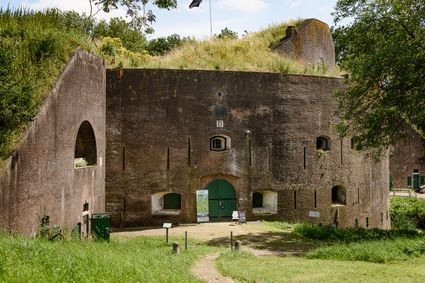
4121 KK Everdingen -
-
Nederlands Zilvermuseum
Nederlands Zilvermuseum
2871 CZ Schoonhoven